
CZM INFRASTRUCTURE CAPACITY BUILDING
GUAM COASTAL MANAGEMENT PROGRAM
To create the responsible and balanced use of Guam’s coastal resources through improving management and policy systems, optimizing planning, creating awareness, and improving the administration and enforcement of natural resource-related laws and regulations
Learn more about CZM INFRASTRUCTURE CAPACITY BUILDING
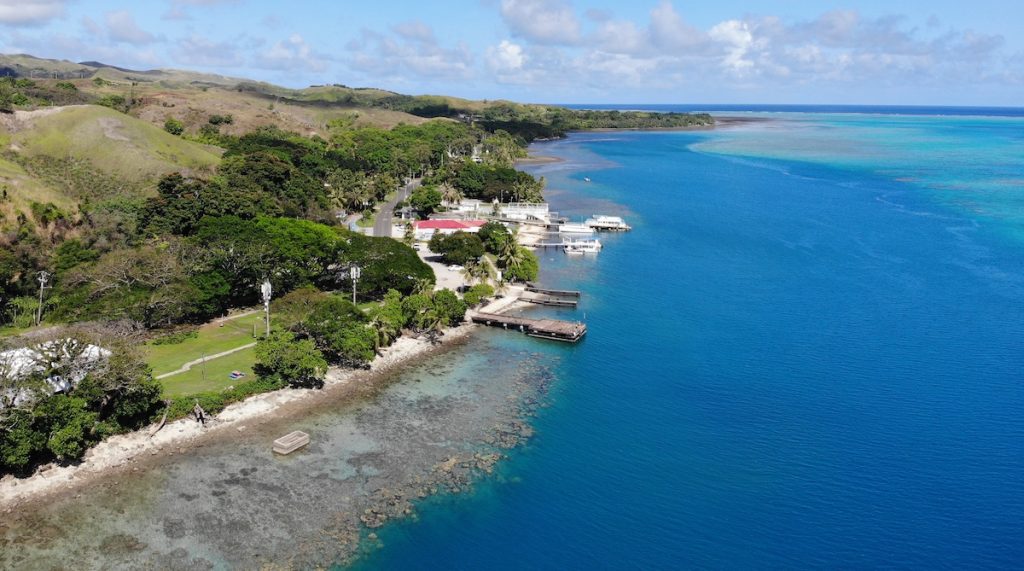
The Bureau of Statistics and Plans, Guam Coastal Management Program and its partners are working to carry out a nearly $225,000 grant from the National Fish and Wildlife Foundation’s Coral Reef Stewardship Fund to accomplish several key objectives over the next three years including:
-
Installation and monitoring of green stormwater infrastructure at the Malesso’ public pier also known as the Malesso’ Veterans Sons & Daughters Pier Park
-
Community engagement through outreach and education
-
Building local capacity for long-term conservation
About Manell-Geus Watershed
The Manell-Geus Watershed in Malesso’, Guam is a critical coastal ecosystem locally that plays a vital role in maintaining coral reef health and marine biodiversity. This watershed spans over 4,000 acres and encompasses Achang Reef Flat Preserve, one of Guam’s five locally managed Marine Protected Areas (MPAs) and represents 10.1% of the island’s MPA network. It also encompasses Cocos Lagoon, the island’s only shallow water lagoon and natural barrier reef system that is home to soft coral strands.
Despite its ecological importance, coral ecologists have identified sedimentation from eroding river banks, extensive badlands, and sparsely vegetated areas as a major cause of reef degradation in the Manell-Geus Watershed and around southern Guam.
This project improves water quality and coral reef health through stormwater management at high-traffic public areas within the watershed. This will be done by installing bioretention basins and a native rain garden to filter and direct runoff before reaching nearshore waters.
These solutions enhance habitat conditions for coral reefs, and coastal ecosystems, benefiting both marine and terrestrial Endangered Species Act (ESA) species. Ongoing water quality issues threaten reef resiliency, biodiversity, and public health.
With increasing population, development, storms, and rainfall, nature-based solutions and green stormwater infrastructure are urgently needed to mitigate degradation.
Project Outcome(s):
- Improved water quality targets: Reduction in enterococci bacteria levels and sediment loads at key monitoring sites, particularly in the Malesso’ Pier – Mama’on Channel to support meeting Guam’s water quality standards monitored by Guam Environmental Protection Agency and establishing water quality targets for neighboring watersheds.
- Site-specific watershed restoration to reduce land-based pollution inputs and improve stormwater management: Implementation of 3 priority green infrastructure solutions/low-infrastructure to manage runoff, decrease sedimentation and pollutant loads from entering nearshore waters through targeted nature-based solutions, and improve stormwater retention capacity.
- Healthy and resilient coral reef systems: Improved coral reef health by reduced sediment and pollution loads, further improving conditions for coral resiliency for current and future generations.
- Increase in coral reef monitoring: In-water marine surveillance with snorkel activities to survey and collect in-water data.
- Improved community engagement.
- Increase capacity building.
- Improve barriers & obstacles of green infrastructure in Guam.
- Increased compliance and partnerships.
Project partners
- Guam Environmental Protection Agency
- Guam Department of Agriculture
- University of Guam Center for Island Sustainability and Sea Grant
- Malesso’ Mayor’s Office
- The community of Malesso’
What is green infrastructure?
According to the 2019 Water Investment Act, green infrastructure is defined as the range of measures that use plant or soil systems, permeable pavement or other permeable surfaces or substrates, stormwater harvest and reuse, or landscaping to store, infiltrate, or evapotranspirate stormwater and reduce flows to sewer systems or to surface waters.
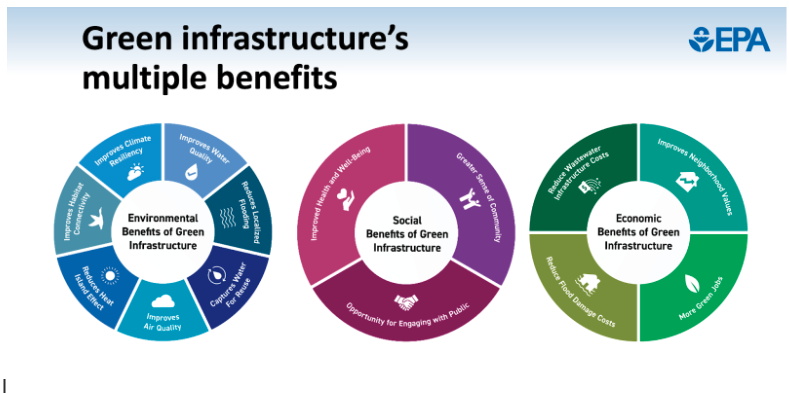
Green infrastructure filters pollutants from runoff and soaks rain water into the ground which is a solution for managing stormwater and provides many environmental, social, and economic benefits to a community.
What are rain gardens and bioretention systems?
Rain gardens are sunken areas in the landscape designed to collect rainwater from parking lots, roofs, sidewalks, and streets and allow it to soak into the ground.
Bioretention systems are similar to rain gardens but are typically more engineered and larger. They are designed to allow water to pond when it rains and then either soak into the ground or flow through an underdrain.
Both are filled with porous filter media and planted with a variety of native vegetation, grasses, utilizing both natural and physical processes to effectively treat and remove pollutants from the stormwater. These two types of green infrastructure can be resilient solutions to water quality issues caused by development.
The Bureau of Statistics and Plans Guam Coastal Management Program along with its partners conducted a rain garden installation training in 2012 and have put together a guide on the process. Visit the link for more info.: https://bsp.guam.gov/wp-bsp-content/uploads/2017/01/120827_Rain-Garden-Installation-Guide_Guam.pdf.
Additionally, the U.S. EPA offers more resources here:
https://www.epa.gov/soakuptherain/soak-rain-rain-gardens.
https://www.epa.gov/green-infrastructure
If you are interested in learning more about this project or how you can get involved, please contact the Project Manager – Carly Champaco-Munoz via email at carly.champaco-munoz@bsp.guam.gov or via telephone at 671-475-9668.
Additionally, if you have any project ideas and are interested in developing collaborative project proposals for habitat restoration and conservation, please reach out and ensure that the project location is on Government of Guam property.
GET TO KNOW US
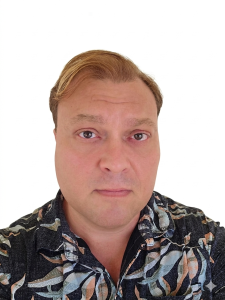
Julian Janssen
Federal Actions planner
Julian Janssen is the Federal Actions Planner for the Guam Coastal Management Program (GCMP), Bureau of Statistics and Plans. He draws inspiration from the Coastal Zone Management Act’s policy “to preserve, protect, develop, and where possible, to restore or enhance, the resources of the Nation’s coastal zone for this and succeeding generations.” He is an alumnus of the University of Guam.
julian.janssen@bsp.guam.gov | 671-300-9665

Contact Us
- P.O. Box 2950 Hagatna, Guam 96932
- (671) 472-4201/2/3
management
- Lola Leon Guerrero - Director - lolalg@bsp.guam.gov
- Matthew Santos - Dep. Director - matthew.santos@bsp.guam.gov
find us
- 513 W Marine Dr. Hagåtña, Guam 96910