Overview
Guam Silver Jackets
On-going Projects
Guam Stormwater Drainage Manual workshop
Coastal Resources
Overview
Coastal Water Resources Overview
#
Guam Silver Jackets
Click here to view the Guam Silver Jackets Webpage.
Silver Jackets Meeting: Discuss Flood Mitigation and Future Collaborations
The Guam Silver Jackets, a collaborative group of local and federal agencies working to address natural hazards, recently convened to review ongoing projects and discuss future initiatives. The meeting focused on key areas such as current and future Silver Jackets projects, flood risk mitigation, data sharing, and policy development.
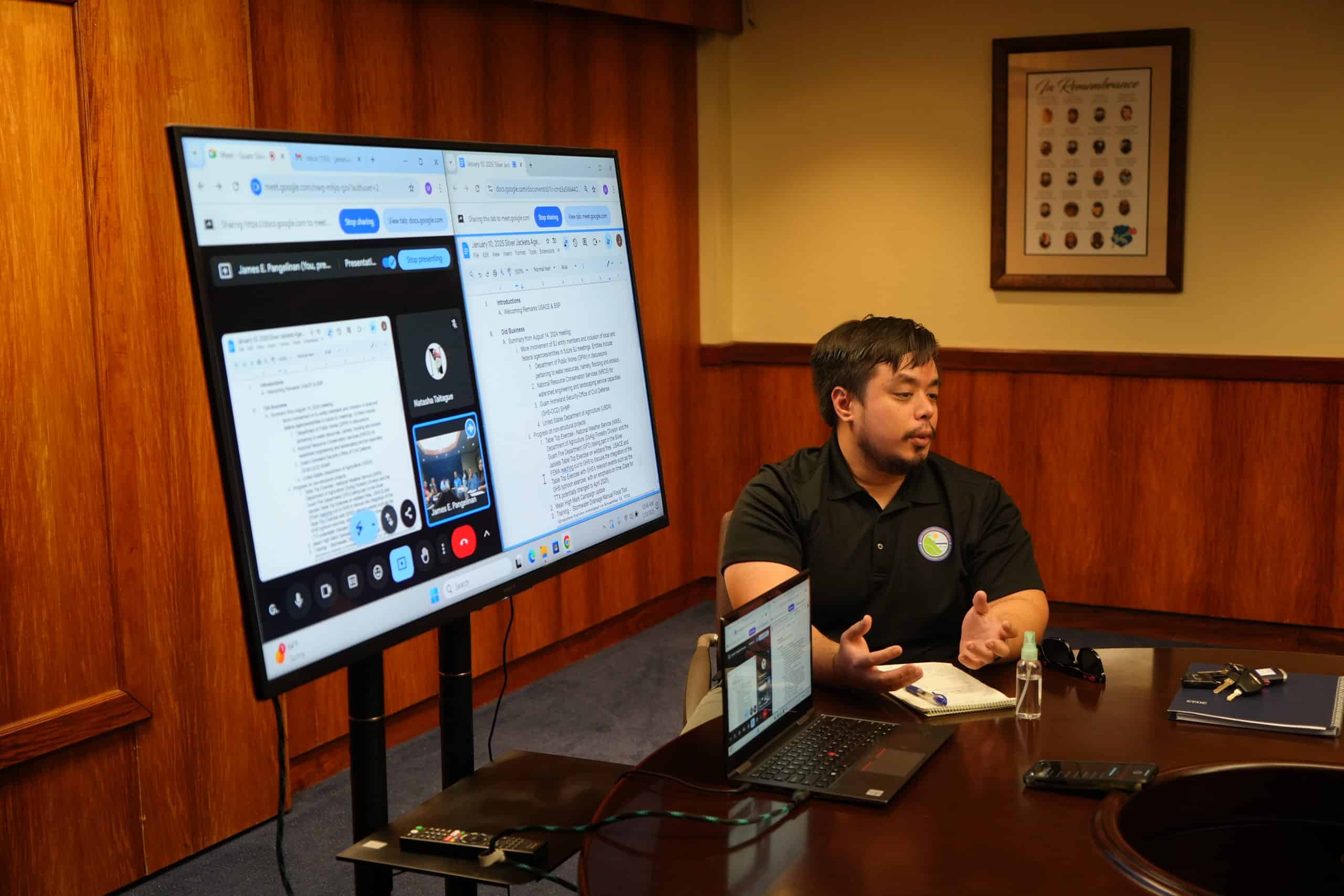
Progress on the Mean High Mark Campaign, an initiative to install flood warning signs, was discussed, with flood areas addressed by various municipal offices. The successful completion of the Stormwater Drainage Manual Training Workshop on the updated flood tool was done on November 14, 2024.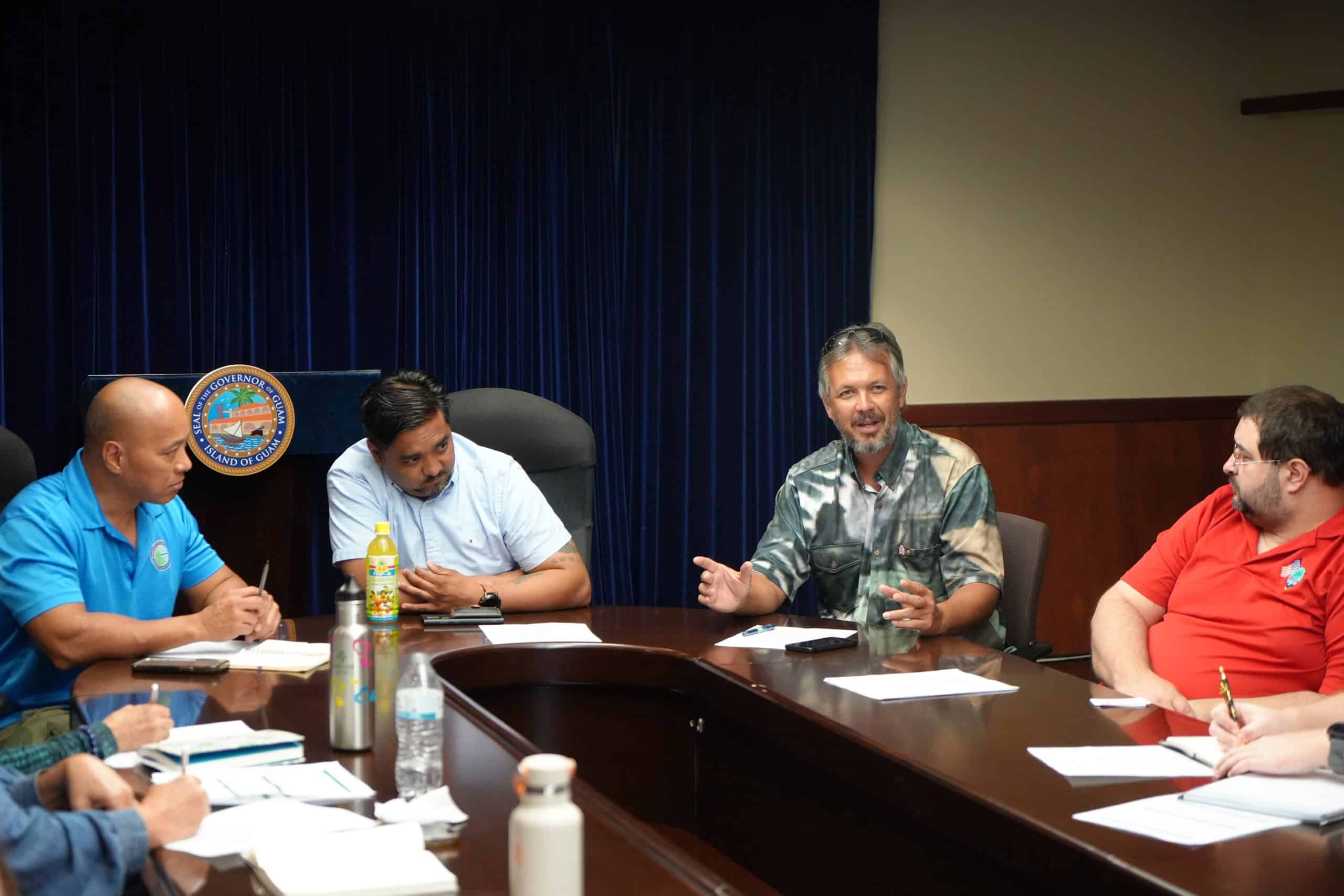
Recommendations for future training sessions to better integrate the tool into permitting processes were given by participants from the public and private sectors. Updates were also provided on several key projects, including the Manell River Project, Agat Shoreline Project, East Agana Shoreline Protection Project, and Umatac River Stabilization Project. A confirmation from key partners from the National Oceanic and Atmospheric Administration – National Weather Service, Guam Fire Department, and the Guam Department of Agriculture – Forestry and Soils Resource Division to take part in the Table Top Exercise on wildland fires was confirmed. The Table Top Exercise will bring the partners together to discuss their roles and functions, the challenges faced, as well as an integrated approach in combating wildland fires immediately and in the long-term timeframe through resiliency planning.
The meeting highlighted the critical need to address data gaps, such as the lack of rainfall data throughout the island and a comprehensive inventory of existing data to bolster future Silver Jackets projects. The potential for collaboration with the Guam Department of Agriculture – Forestry and Soils Resource Division to utilize their weather station for data collection was offered and discussed with members.
The need to address flood policy issues, particularly those related to stormwater management in smaller subdivisions, was re-recognized. The successful competition of the 2050 Guahan Sustainability Plan was identified as a potential avenue for addressing some of these policy concerns.
The meeting explored the possibility of establishing steering committees to focus on specific areas, such as technology and data, flood policy, and capital improvement projects, in order to streamline and optimize the planning process for future Silver Jackets projects. The need for brainstorming sessions to generate potential Silver Jackets project proposals was also emphasized.
The Silver Jackets team will schedule and conduct a Table Top Exercise on wildland fires. Planning meetings will be coordinated to develop potential Silver Jackets project ideas. Further training on the Stormwater Drainage Manual Flood Tool will be provided, and additional planning meetings will be held to discuss data and technology needs for Silver Jackets projects.
The meeting underscored the importance of continued collaboration and information sharing among agencies to effectively address the challenges posed by natural hazards and enhance community resilience in Guam.
On-going Projects
#
Guam Stormwater Drainage Manual workshop
Intro Writeup
Coastal Resources
Marine Resources
Guam’s Marine Preserves
Marine preserves are areas set aside to protect, preserve, manage, and conserve aquatic life, habitat, and marine communities and ecosystems. Preserves ensure the health, the welfare, and the integrity of marine resources for current and future generations. On May 16, 1997, Public Law 24-21 was implemented, creating five (5) marine preserves and revising Guam’s fishing regulations. The names of the preserves are the Pati Point Preserve, the Tumon Bay Preserve, the Piti Bomb Holes Preserve, the Sasa Bay Preserve, and the Achang Reef Flat Preserve. On April 14, 2006, Public Law 28-107 was implemented strengthening the protection of Guam’s marine preserves by prohibiting non-fishing activities such as development, construction, drilling, and trenching within the preserves.
>> Fishing Laws
>> MPA Atlas website (once it’s public)
>> Coral Reef Fish Population Assessment
>> GIS Tools
#
Testimonial Sample Here. Testimonial Sample Here. Testimonial Sample Here. Testimonial Sample Here. Testimonial Sample Here. Testimonial Sample Here. Testimonial Sample Here. Testimonial Sample Here. Testimonial Sample Here.

Testimonial Sample Here. Testimonial Sample Here. Testimonial Sample Here. Testimonial Sample Here. Testimonial Sample Here. Testimonial Sample Here. Testimonial Sample Here. Testimonial Sample Here. Testimonial Sample Here.

Testimonial Sample Here. Testimonial Sample Here. Testimonial Sample Here. Testimonial Sample Here. Testimonial Sample Here. Testimonial Sample Here. Testimonial Sample Here. Testimonial Sample Here. Testimonial Sample Here.


James Pangelinan
Planner, GUam Coastal Management Program